
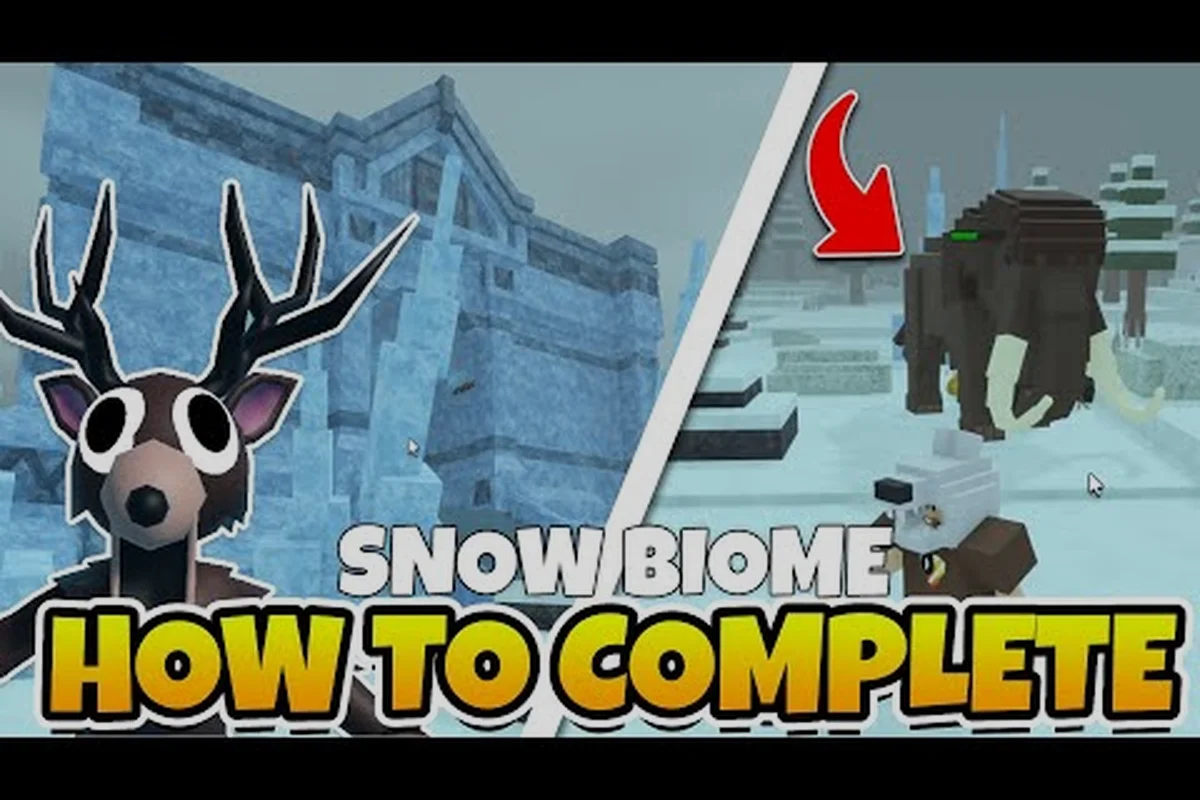
The 99 nights in the forest snow biome spawn sits in one of the chilliest corners of the entire map, and chasing it down without a plan usually costs players an entire night cycle. Knowing where the entrance triggers, how the rotation pulls you toward the frozen ridges, and which cabins dot the inner clearing makes the difference between a wasted run and a fully stocked cold-survival kit. This guide covers the exact mechanics that gate the snow biome, the landmarks players use to navigate toward the spawn, and the survival prep you should finish before stepping across the frost line.
How the Snow Biome Spawn Works in 99 Nights in the Forest
The snow biome is one of the newer additions to the 99 nights in the forest biomes roster, and unlike the forest core it does not appear in every match. The rotation system drives whether a given run will feature the snow biome at all, and when it does, the spawn point itself sits at the edge of a frozen clearing rather than mid-forest. Players who understand the rotation logic save hours of wandering because they wait for the right cycle instead of brute-forcing the map.
Spawn Triggers and Map Rotation Logic
The biome refresher system that controls the 99 nights in the forest biomes rotation checks a hidden seed every match start. When the seed rolls a snow cycle, the map reshuffles the outer ring of zones and a frost-corridor replaces the usual meadow band on the far side of the forest. The spawn point sits where that corridor meets the central tree line, which makes the walk path predictable once you have seen it once.
| Trigger Condition | Map Effect | Snow Biome Spawn Active? |
|---|---|---|
| Snow seed rolled by biome refresher | Frost corridor replaces outer meadow band | Yes |
| Standard forest seed | Default temperate layout | No |
| Volcanic seed active | Lava zone replaces snow ring | No |
| Co-op snow override enabled by host | Snow corridor forced in all rounds | Yes |
| Player count 4+ during snow cycle | Spawn shifts slightly north for spread | Yes |
Community testing on the r/99nightsintheforest subreddit suggests the snow cycle appears roughly every 3 to 4 full rotations, which lines up with the broader biome rotation notes covered in the broader all-biomes breakdown. Once you hear the audio cue shift from crickets to wind howl, the corridor is already live and the spawn marker becomes visible on the map screen.
Visual and Audio Cues Near the Spawn
Approach the snow biome spawn from the central campfire and the first tell is the ground texture shift from brown loam to pale frost grass. The skybox darkens about a minute later even during daytime, and the wind sound ramps in over a few seconds. Players who know the cues can pivot mid-night without losing their gathering momentum.
| Cue Type | What Players Notice | Range from Spawn |
|---|---|---|
| Ground frost texture | White-blue grass tint | ~200 studs |
| Wind ambient | Persistent low howl | ~400 studs |
| Skybox dimming | Permanent overcast | ~600 studs |
| Snowfall particles | Drifting flecks | ~150 studs |
| Temperature debuff icon | UI snowflake marker | At spawn entrance |
Map Layout Around the 99 Nights in the Forest Snow Biome Spawn
The frozen section of the 99 nights in the forest map is laid out as a wide horseshoe with the spawn at the open end. Players enter from the south tree line, walk up a sloped clearing, and curve east or west into two separate cabin clusters. A central frozen pond anchors the middle of the horseshoe and serves as the easiest orientation landmark once you have crossed the threshold.
Landmarks and Travel Routes to the Spawn
Three reliable paths lead from the main forest into the snow biome, and choosing the right one depends on your current gear. New players should take the central meadow path because it is the shortest and least likely to trigger ambushes. Veterans with cold resistance gear can cut through the eastern ridge for a faster line, but that path passes a sawmill area that often spawns hostile NPCs.
| Route Name | Starting Point | Travel Time | Risk Level |
|---|---|---|---|
| Central Meadow Path | Base campfire | ~4 minutes | Low |
| Eastern Ridge Cut | Sawmill landmark | ~2.5 minutes | Medium |
| Western River Trail | Fishing cabin | ~3.5 minutes | Low |
| Direct Forest Edge | Northern tree wall | ~5 minutes | High |
| Co-op Split Route | Designated rally rock | ~2 minutes | Variable |
The route through the western river trail is the one most players recommend for first-time visitors, because the fishing cabin serves as a natural resupply point before the cold zone begins. Detailed travel comparisons and sawmill tactics are documented in the where-is-the-volcano biome guide, which uses the same map reference grid even though it focuses on the volcanic counterpart.
Cold Debuff and Survival Prep Before Entering
Crossing into the snow biome spawn without cold resistance turns the first two in-game hours into a survival timer. The cold debuff stacks at a rate of about 1% per minute at the entrance and accelerates once you reach the inner clearing. The two cheapest counters are the campfire buff from the central spawn fire and the wool coat craft that drops from the cabins scattered around the rim.
| Prep Item | Effect | Source |
|---|---|---|
| Wool Coat | -50% cold stack rate | Cabin wardrobe chest |
| Campfire Buff | Pauses debuff for 5 min | Spawn fire pit |
| Hot Stew | -30% cold, +10% HP regen | Cabin kitchen |
| Torch | Light radius bonus, slight warmth | Crafted at base |
| Co-op Buddy | Shared warmth radius | Player proximity |
Players who ignore the prep phase and rush the cabins usually end up retreating within 90 seconds of entering the inner clearing, which is why the prep checklist above should be completed before any exploration. Carrying at least one hot stew into the spawn zone gives you enough buffer to loot two cabins before the cold stacks become dangerous.
Cabins and Key Locations Inside the Snow Biome
The cabin network inside the 99 nights in the forest snow biome spawn is denser than what you find in the standard forest biome, which makes the cold zone surprisingly rewarding once you survive the debuff. There are seven named cabins plus the central lodge that sits at the heart of the horseshoe layout. Each cabin has a fixed loot table, and the spawn point itself acts as a soft checkpoint because the central lodge always respawns with a lit fireplace.
Cabin Layout and Loot Tables
The 99 nights in the forest cabins scattered across the snow biome are grouped into two clusters: the eastern ridge cabins and the western pond cabins. The eastern cluster favors combat loot like ammo and torches, while the western cluster leans toward survival items such as food and crafting materials. The central lodge at the heart of the horseshoe contains a guaranteed wool coat and acts as a fast-travel anchor once you unlock it.
| Cabin Name | Cluster | Primary Loot | Secondary Loot |
|---|---|---|---|
| Ridge Lookout | East | Ammo crate | Torch bundle |
| Frozen Outpost | East | Bandage stack | Wool coat |
| Pondside Cabin | West | Cooked fish | Hot stew recipe |
| Hunter's Lodge | West | Traps, bait | Wool coat |
| Central Lodge | Middle | Fireplace, bed | Random rare |
| Ice Shrine | North | Cosmetic charm | Small gem |
| Old Sawmill | South | Wood bundle | Scrap metal |
A full cabin sweep on a fresh spawn typically yields two wool coats, a stack of bandages, and enough cooked food to last the next three nights in the standard forest. The central lodge's random rare drop can occasionally be a high-tier cosmetic that does not appear anywhere else in the rotation, which is why veteran players always clear the lodge first.
The Frozen Temple Near the Snow Spawn
Tucked behind the central lodge sits one of the 99 nights in the forest temple variants — a snow-capped ruin that is easy to miss on a first visit. The temple entrance is gated by a short ice-puzzle that requires torches to melt a series of frozen blocks. Once cleared, the inner chamber contains a chest with snow-biome-exclusive cosmetics and a teleport pad that links back to the main forest campfire.
| Temple Feature | Requirement | Reward |
|---|---|---|
| Ice block puzzle | 3 torches lit simultaneously | Chest access |
| Inner chamber chest | Puzzle solved | Snow cosmetic set |
| Teleport pad | Activated once | Fast travel to base |
| Hidden side room | Co-op only | Bonus gem cluster |
| Lore tablet | Read interact | Background story |
The temple is the single biggest reason to make the snow biome spawn a priority on every snow cycle, because the fast-travel pad alone saves players roughly ten minutes of return travel after a full cabin sweep. The exact temple mechanics are similar across biomes, and a full breakdown of the forest temple location covers the analogous puzzle layouts in the volcanic counterpart.
Strategy Tips for Reaching and Surviving the Snow Biome
Reaching the 99 nights in the forest snow biome spawn is only half the challenge, and surviving the inner loop for more than a single night requires a slightly different playstyle than the temperate forest. The cold debuff pressures you to keep moving, but the cabin density rewards slow methodical clears. Balancing that tension is what separates a one-time visitor from a snow-cycle veteran.
Optimal Night Cycles and Co-op Tactics
The best window to push the snow biome spawn is the second night of a snow cycle, because the central lodge is guaranteed to be active and the cabin chests have already respawned from the first night's reset. Going on the first night is risky because the spawn is cold but most of the cabin loot is still locked, and going on the third night is wasted because the cycle usually rotates out by then.
| Night of Cycle | Cabin State | Cold Level | Recommended? |
|---|---|---|---|
| Night 1 | Locked chests | Harsh | No |
| Night 2 | Unlocked, fresh | Moderate | Yes |
| Night 3 | Partially looted | Mild | Optional |
| Day visits | No cold debuff | None | Loot only |
Co-op teams should split into two squads: one squad clears the eastern cabins while the other sweeps the western pond cluster, and both regroup at the central lodge within fifteen minutes. The shared warmth radius from co-op proximity reduces the cold debuff stacking rate by roughly 40%, which lets a four-player team clear every cabin and the temple in a single night. More general biome survival patterns, including how cold compares to the volcanic zone hazards, are documented in the volcano-zones overview.
Common Mistakes Players Make at the Snow Spawn
Even experienced players fall into a handful of predictable traps when they first push the snow biome spawn. Most of these mistakes are survivable but cost time and resources, and avoiding them is the difference between a clean snow run and a forced retreat back to the main campfire.
| Mistake | Consequence | Fix |
|---|---|---|
| Entering without wool coat | Forced retreat in 90s | Loot cabin wardrobe first |
| Ignoring the spawn fire | Cold stacks at full rate | Activate campfire buff early |
| Solo temple run | Ambushed by ice wraith | Bring at least one co-op partner |
| Forgetting hot stew | Slow regen during fight | Craft at pondside kitchen |
| Skipping side rooms | Miss gem clusters | Check every door on co-op runs |
The single biggest mistake is treating the snow biome spawn like a standard forest expansion, when in reality it functions as a self-contained mini-map with its own pacing. Players who respect the cold timer, prep before crossing the threshold, and clear the cabins in a deliberate order walk out with full inventories and a fast-travel pad. Players who rush usually end up back at the main campfire with a half-looted zone and a wasted cold cycle.
Snow Biome Spawn vs Other 99 Nights in the Forest Biomes
Comparing the snow biome spawn against the other 99 nights in the forest locations gives a clearer picture of when to prioritize each zone. The forest core remains the safest farming ground, the volcanic zone offers the best combat loot, and the snow biome is the middle ground between resource density and risk. Understanding that tradeoff helps players decide which biome to push on any given cycle.
Players seeking specific spawn points for the snow biome in 99 Nights in the Forest can find guidance on the best strategies and locations by consulting PC Gamer's 99 Nights in the Forest tips guide, which details where and how creatures and resources appear across each biome.
Comparison Table of Biome Spawn Rewards
| Biome | Risk Level | Loot Density | Cold/Lava Effect | Best For |
|---|---|---|---|---|
| Forest Core | Low | Medium | None | Early game farming |
| Snow Biome | Medium | High | Cold debuff | Mid-game gear push |
| Volcanic Zone | High | Very high | Lava damage | Late-game combat loot |
| Meadow Edge | Low | Low | None | Co-op rally point |
| River Band | Medium | Medium | None | Fishing and food |
The snow biome is the most balanced option for solo players who have outgrown the forest core but are not yet ready for the volcanic zone. Its cold debuff is manageable with the wool coat, and its cabin density rivals the volcanic loot tables in raw value. Players who rotate between the snow and forest biomes every cycle tend to progress faster than players who grind a single biome exclusively.
When to Skip the Snow Spawn
There are three reliable scenarios where skipping the snow biome spawn is the correct strategic call. The first is when the biome rotation did not roll a snow seed, because the spawn simply will not be available. The second is when the player is already deep into a volcanic cycle, because the lava zone's combat loot is more valuable than anything the snow cabins offer. The third is when the host has disabled the snow override in a co-op session, which forces all players into the standard forest layout.
| Skip Condition | Reason | Better Alternative |
|---|---|---|
| No snow seed rolled | Spawn not in rotation | Farm forest core |
| Volcanic cycle active | Higher combat loot | Push lava zones |
| Host disabled override | Snow corridor absent | Stay near base |
| Co-op team <2 players | Cold debuff too harsh | Wait for full squad |
| Wool coat not crafted | No cold resistance | Grind cabins for cloth first |
Players who chase the snow biome spawn every single cycle often burn through their cold-resistance supplies and end up undergeared for the next forest core push. A balanced rotation that hits the snow biome roughly once every three cycles produces the strongest long-term progression curve. The volcanic ram home biome guide covers the related late-game biome counterpart for players who are already past the snow stage.
Frequently Asked Questions
Where exactly is the 99 nights in the forest snow biome spawn on the map?
The snow biome spawn sits at the southern edge of a frozen clearing, where the frost corridor meets the central tree line. You will see a campfire pit, a wind sound cue, and ground texture shift to pale frost grass roughly 200 studs before the actual spawn marker.
Does the snow biome appear in every match?
No, the biome refresher system rolls a snow seed only about once every 3 to 4 rotations. When the seed does not roll, the spawn does not exist and you should pivot to the forest core or volcanic zone instead.
What is the fastest route from the main campfire to the snow spawn?
The eastern ridge cut from the sawmill landmark is the shortest at roughly 2.5 minutes, but the central meadow path is safer for solo players at about 4 minutes. Both routes end at the same spawn entrance.
How do you survive the cold debuff inside the snow biome?
The wool coat from any cabin wardrobe reduces cold stacking by 50%, and the central lodge campfire pauses the debuff for 5 minutes. Combining both plus at least one hot stew gives you enough buffer to clear most of the inner zone.
Can you fast travel back to base from the snow biome?
Yes, the inner temple near the central lodge contains a teleport pad that links back to the main forest campfire once the ice puzzle is solved. The pad is a one-way shortcut that saves roughly ten minutes of return travel.